The New Landlord Database Is Coming – Here’s What Landlords Need to Prepare Now
The next major stage of the Renters’ Rights Act is on its way.
On 9 September 2026, the Government confirmed plans for the rollout of its new “Register your rental property” service – the national registration system which will form part of the new Private Rented Sector Database.
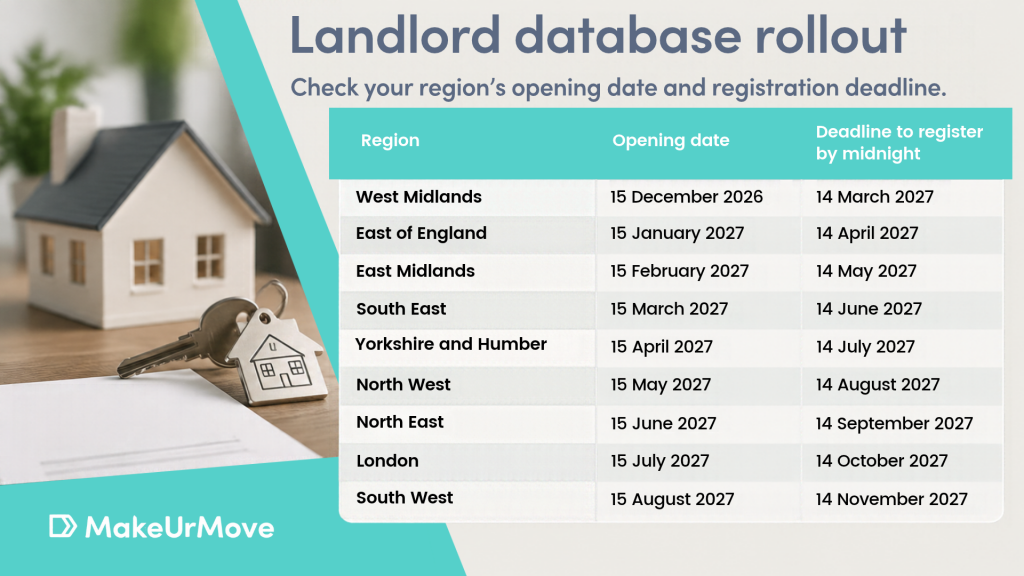
Registration will be a legal requirement for landlords in England, with the system being introduced region by region. The first landlords will be required to register from 15 December 2026, beginning with properties in the West Midlands, before the scheme is rolled out across England over the following 12 months.
Landlords will have a three-month registration period once their region is brought into the scheme, and the Government expects all landlords actively letting property to be registered by 14 November 2027.
So, while you may not need to register immediately, now is the time to make sure your property and compliance records are in order.
What is the Private Rented Sector Database?
The database is one of the major reforms introduced by the Renters’ Rights Act 2025.
It is intended to create a central record of private landlords and privately rented properties in England.
Initially, the registration requirements will apply to properties which are already let, or which become occupied during the rollout. The Government has also confirmed that future requirements will extend registration to properties before they are marketed for rent, with registration numbers ultimately required on property advertisements.
The database will also give local authorities considerably greater visibility of the private rented sector and landlords' compliance with their legal obligations.
For compliant landlords, that means good record keeping is becoming more important than ever.
What information will landlords need?
The draft Private Rented Sector Database Regulations give us much more detail about what landlords should expect to provide.
The database is not simply going to ask for your name and the address of the property.
Landlords should expect to provide information about the landlord, the property, the tenancy and its compliance position.
For each property, this includes information such as:
- the property address and ownership details;
- property type and number of bedrooms;
- whether the property is currently let;
- the number of occupants and households;
- whether the property requires an HMO, additional or selective licence;
- gas safety information, where applicable;
- electrical safety information and documentation;
- Energy Performance Certificate information;
- the rent being charged and frequency of payment; and
- whether the property is furnished, partly furnished or unfurnished.
Landlords with jointly owned properties will also need to ensure that the relevant details for all landlords are available.
Start checking your compliance documents now
The important point for landlords is that the database will increasingly bring information which may currently be stored in different places into one central system.
If you have several rental properties, now is a sensible time to carry out a basic audit.
Check that you can quickly identify the current compliance position for each individual property.
That means making sure you have access to current gas safety records where required, electrical safety documentation, EPCs and licensing information, alongside accurate tenancy and property details.
It is also worth checking expiry dates rather than simply confirming that a document exists.
A certificate sitting in an email inbox or an old folder is not particularly helpful if you don't know when it needs renewing.
Don't wait until your registration window opens
The Government intends to give landlords three months to register once their region is called forward.
That sounds like plenty of time.
For a landlord with one property and perfectly organised records, it probably is.
For landlords with larger portfolios, older tenancies, properties managed through different agents or compliance documents stored across several systems, registration could involve considerably more work.
There is therefore little benefit in waiting.
The information being requested largely reflects information responsible landlords should already hold. The easiest approach is to start organising it now.
Registration won't be a one-off exercise
Landlords should also be aware that the database is intended to remain current.
The draft regulations provide for information to be updated when relevant circumstances change and for active entries to be renewed. Property entries will generally operate on a 12-month renewal cycle.
This means the database should not be viewed as another form to complete once and forget about.
It is part of a wider move towards landlords maintaining an accessible, up-to-date digital compliance record for every property they let.
What happens if a landlord doesn't register?
Registration will be mandatory.
The Government has confirmed that landlords who fail to comply risk financial penalties, but the consequences potentially go further than a fine.
The Renters’ Rights Act also contains restrictions affecting a landlord's ability to obtain possession where the required database entry is not active, subject to limited exceptions.
Additionally, it is likely that agents and portals will require confirmation of the registration number before they can provide services.
That makes registration something landlords cannot afford to overlook.
Good landlords should start preparing now
The regulatory burden on private landlords has increased significantly, particularly following the introduction of the Renters’ Rights Act reforms on 1 May 2026.
The new database adds another administrative requirement, but it also reinforces something we have advocated for some time: landlords need a simple way to see the compliance position of their portfolio in one place.
Good Landlord is designed to help landlords do exactly that.
Membership gives landlords access to tools including a Document Vault, Compliance Reminders, Certificate Storage, Landlord Dashboard and Tenancy Management, helping you keep important property and tenancy information organised as the regulatory landscape continues to change.
Join Good Landlord membership to start getting your portfolio organised and stay on top of your property compliance.
Not ready to join yet?
Sign up to the Make Ur Move landlord newsletter and we'll keep you updated as the database rollout progresses, including registration dates, new guidance and the practical steps landlords need to take.
This article is intended as general information for landlords and does not constitute legal advice. Requirements may change as the relevant regulations and government guidance are finalised.